
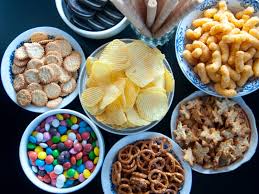
In 2019, nutrition scientist Kevin Hall and his colleagues published eye-popping results from a unique experiment. For four weeks, study participants stayed in a hospital ward at the National Institutes of Health, splitting their time on two different diets: one high in minimally processed foods, the other high in ultra-processed foods, products that contain factory-made ingredients and additives not found in a typical home kitchen. On the ultra-processed diet, individuals ate a whopping 500 calories more per day.
Although small and time-limited, this was the first experimental study to link UPFs to human obesity. The work has since been cited in hundreds of scientific papers and continues to garner attention from the news media. The research was also featured in a bestselling book by Chris van Tulleken, “Ultra-processed People: The Science Behind Food That Isn’t Food.”
It might come as a surprise, then, that Hall has teamed up with award-winning health journalist Julia Belluz for a new book that takes a nuanced approach to UPFs: “It’s not a manifesto of demonizing ultra-processed foods,” he told Undark. Instead, the authors chart a fascinating history of nutrition research, showing how time and again, preliminary discoveries get swept up in fad diets or packaged into commercial products of dubious benefit. “We’ve rarely been humble in our application of nutrition science,” they write.