
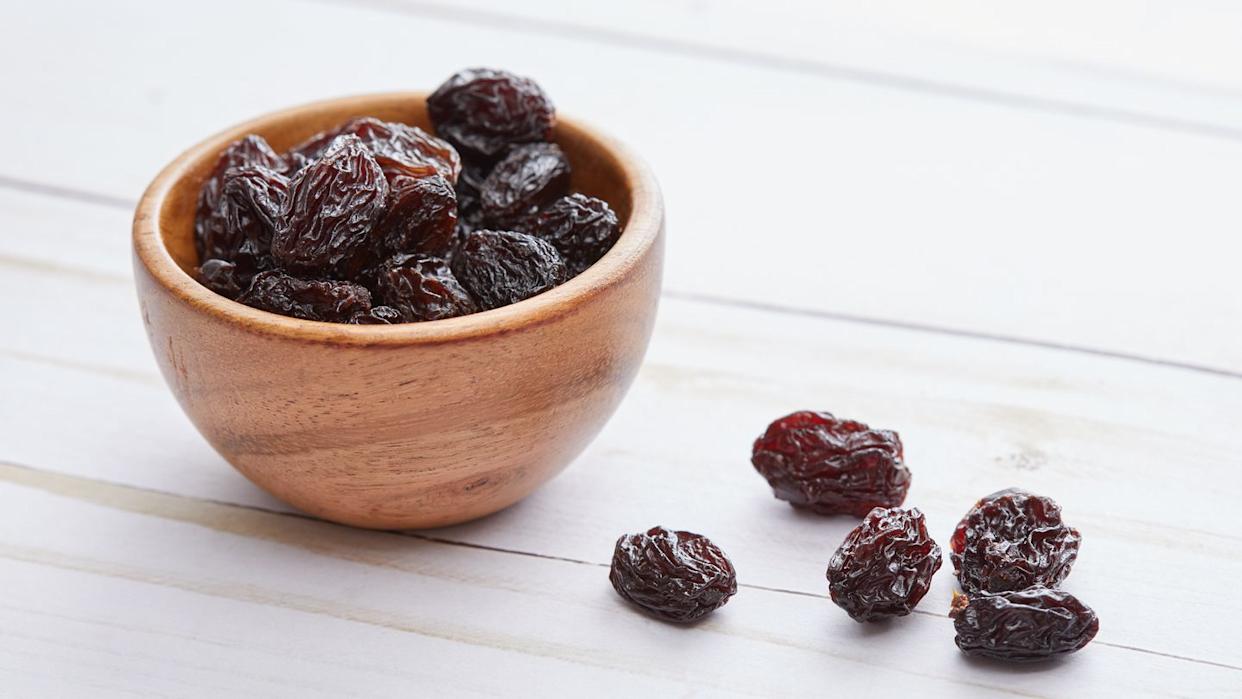
If you have a sweet tooth but want to resist reaching for candy, you may keep raisins on your snack roster, which could have you wondering: Are raisins good for you, actually? After all, raisins are technically a fruit, which makes it easy to assume that they automatically fall into the healthy food category. That isn’t totally untrue. However, eating the dried grapes regularly can have its ups and downs.
We asked dietitians to explain those nuances, plus share more information on how raisins can fit into a balanced diet. Keep reading for everything you need to know.
Raisin nutrition:
“Raisins are a fairly concentrated source of nutrients,” says Lena Bakovic, M.S., R.D.N., C.N.S.C., a dietitian at Live it Up. Despite their high natural sugar content, research has found them to be healthy when enjoyed at the right times and in the right amounts. Here’s more of a breakdown on their nutrition:
Carbohydrates
With 34 grams of carbs in one small box, Katie Schimmelpfenning, R.D., founder of Eat Swim Win, says that she often recommends raisins as a snack to active individuals for quick energy and people who struggle to meet their daily carbohydrate needs.
Vitamins and minerals
Raisins are rich in antioxidants, which “prevent oxidative stress and positively contribute to chronic disease prevention,” says Bakovic. Schimmelpfenning adds that a small handful “offers about a third of a banana’s potassium and nearly as much iron as a small serving of chicken.”
Fiber
Raisins also contain small amounts of dietary fiber, “which essentially functions as a prebiotic, helping to fuel beneficial gut bacteria, which is important for digestive function and overall gut health,” Bakovic explains.
Raisins and weight loss
If you have weight loss goals, raisins can be incorporated into a balanced diet, Bakovic says. However, because they are high in natural sugars and relatively calorie-dense for their size, “portion control would be of essence,” she adds. She suggests paying attention to and following packaging’s recommended serving size, which is typically around 1.5 ounces.