
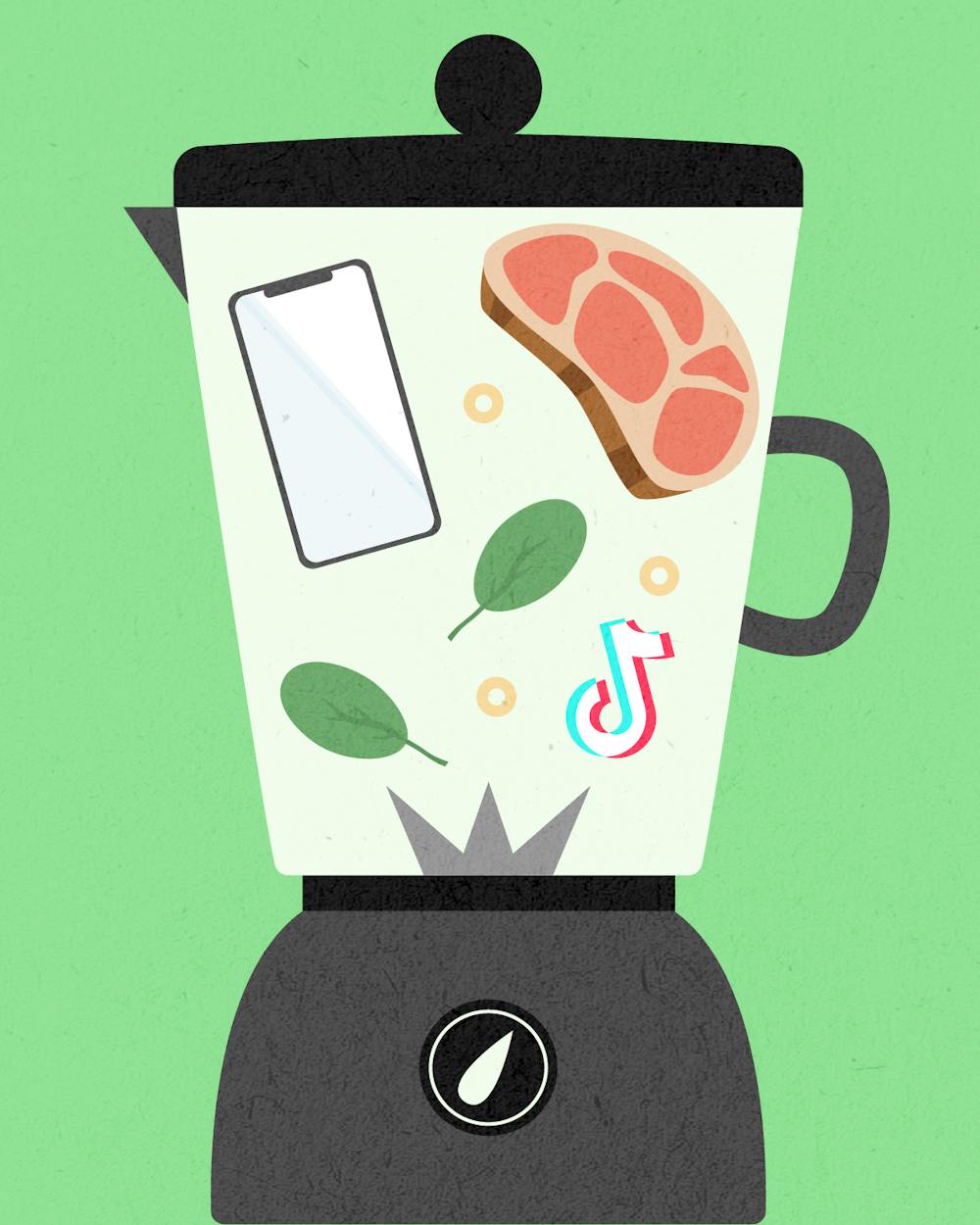
Imagine yourself scrolling through TikTok and finding out that the Cheerios you eat every morning are slowly killing your gut microbiome, seed oils are causing inflammation and that quinoa is a poverty-level peasant food spawned by misinformed radical vegans.
While this may sound alarming, never fear because the “holistic nutritionist” claims that a multi-day juice cleanse, a 1,200 calorie deficit or consuming only raw milk and red meat is the perfect liver detoxing and gut healing diet you will ever need.
Does this sound familiar? Influencers on social media apps such as TikTok and Instagram are spreading misinformation about nutrition and instilling fear into the lives of consumers. Their promotion of “diet culture” encourages food restriction, idealization of thinness, glorification of weight loss and stigmatization of certain body types through their persistent guilt-inducing messages.
A systematic review published by the National Library of Medicine concluded that 48.8% of the quality and 48.9% of the accuracy of nutrition-related information were low across various social media websites. The study also concluded that information related to weight loss or supplements received a larger proportion of false information and inaccuracy compared to other topics.
Dr. Paul Branscum, a professor in the Kinesiology, Nutrition and Health Department at Miami University with a doctor of philosophy degree in health promotion and education, teaches topics related to public health behavior change and nutrition. He said how the misinformation about nutrition on social media affects college students, particularly those with nutritional goals.
“Achieving specific diet-related goals, such as gaining muscle mass, will be a very difficult endeavor,” Branscum said. “So if a social media influencer says something you want to hear, you are more willing to listen and accept it without actually verifying or fact-checking the information.”
TikTok’s algorithm-driven content prioritizes short, engaging videos filled with buzzwords, eye-catching infographics and emotionally related content, allowing influencers to forsake evidence and credibility for views. This undermines the trust in public health professionals and science-backed interventions.
“The question becomes, ‘How accessible professionals, such as your primary care physician or dietitian, are?’” Branscum said. “The internet is often in our backpockets, and if we are hearing information we want to hear very easily, it can become rewarding very quickly; this will allow us to ignore seeking professional advice.”